Life At The Edge: A British Antarctic Survey Q&A
British Antarctic Survey radio operator Michael Young talks life at Rothera, journey south, family sacrifice and witnessing climate change up close.
From Army radio rooms to Rothera’s runways, Michael Young shares what it really means to live, work and stay human on the frozen continent.
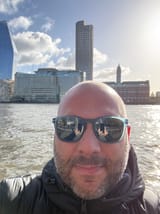
Welcome back to Field Notes for Modern Life. This is a place for human stories, and I am delighted to publish my first Q & A with an old friend and colleague, Michael Young. We both served together in the military, and although our paths went in a different direction, Mickey’s went as far south as you can get. He’s proudly serving with the British Antarctic Survey. Before we get into this first Q&A session, I’d like to thank Mickey for his generous time, and for providing lots of amazing images.
British Antarctic Survey Mission
To be a world-leading centre for polar science and polar operations, addressing issues of global importance and helping society adapt to a changing world.
How did Antarctica first get on your radar?
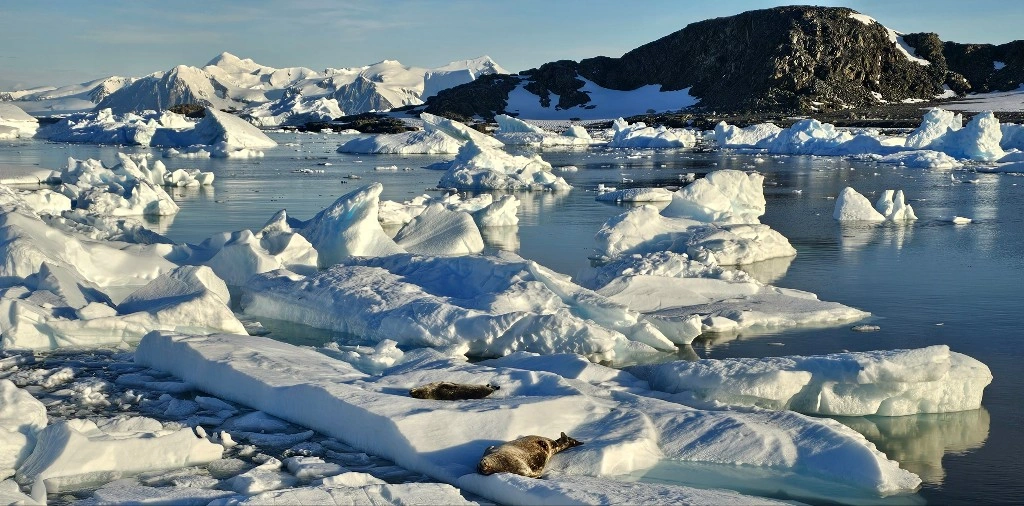
Antarctica was always mysterious to me from a young age, to learning bits about it during my school days, and watching documentary programmes.
After leaving school, it’s somewhere I did not really think about. After being in the Army a few years, I was posted to the Royal School of Signals at Blandford Forum, Dorset. It was around April 2002 when I saw an advert printed on the Part One Orders looking for Radio Operators from The Royal Signals to apply for a secondment to the British Antarctic Survey and go to Rothera Research Station, on the Antarctic Peninsula.
After applying for the role, I heard that I had made the initial selection process. I was called to the British Antarctic Survey headquarters at Cambridge for an interview. Two weeks after the interview, I was informed that I had been successful, and I had been selected to work with BAS. I would be seconded to them for close to a year to do all my pre-deployment training and go to Antarctica to do communications for them.
Since my time with the British Antarctic Survey, when I was in the Army, I have always stayed in touch with the people I worked with down there and attended reunion weekends in the UK. Fast forward 23 years later and when I learnt I would get voluntary redundancy from my job at Openreach. I was chatting to my good friend (old BAS Comms Manager) Andy Barker, and he informed me that BAS now recruits radio operators to do the role I did many years ago.
Without hesitation I updated my CV and covering letter with two strong references backing me up, I applied to return to Rothera Research Station in Antarctica, and a few months later I am back here now writing this Q&A session with you overlooking the best scenery you could ever ask for in a job.
When you told people you were heading to Antarctica, what were the most common reactions?
The most common reaction people have when they hear about me coming to Antarctica to work is shock or disbelief. When I worked my notice period in my previous job, a lot of my work friends were always asking what my plans were. When I told them I had applied for a role with the British Antarctic Survey, they were shocked and unaware of what it did and what it involved. Once I told them about it, a lot were envious, but also very supportive.
My close friends were very surprised when I first told them I had been offered the role. Still, right until I departed, I did not believe it was actually happening.
For my family it was a mixture of both excitement as well as sadness. When I came to Antarctica back in 2002 my family were very supportive as it was something nobody in our family had ever done. To this day I still think I am the only person from our village that has been to Antarctica.
This time it was tougher to come away to do my job as I now have my own family with my wife Claire and our two sons Alex and Kieron, so it was very difficult to leave them behind while being about 9000 miles away and in a different hemisphere from them.
Being so far away is a shock to yourself and your loved ones and friends, but with today's modern technologies you are more connected so I regularly speak and chat to my family and friends as well as video calls. When they see where I work and wildlife, they get very jealous.
Take us on the trip down there. What did your journey to Antarctica actually involve?
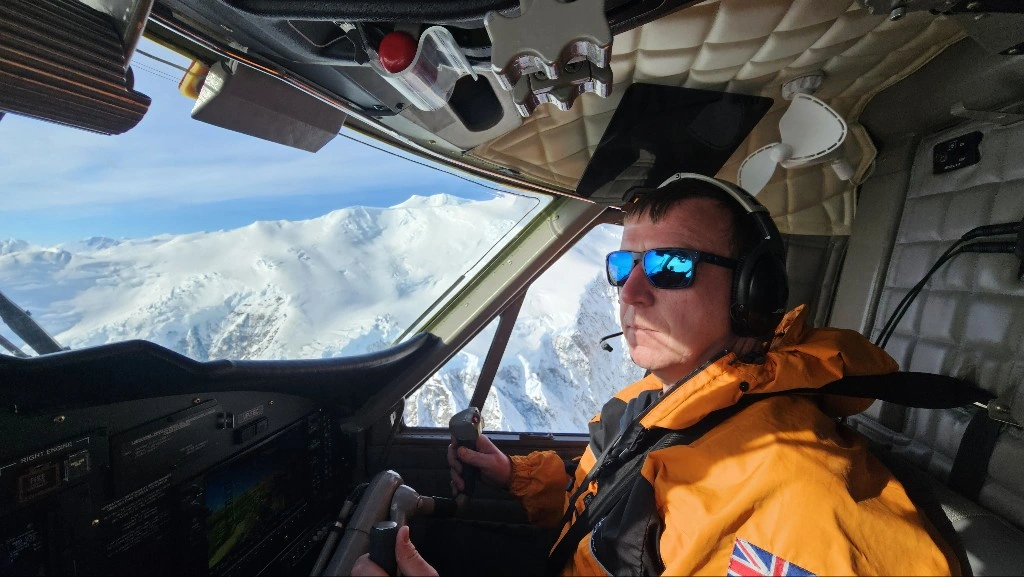
The journey started at my home in Esh Winning which is located approximately 6 miles west of Durham City. I travelled from home to London Heathrow Terminal 3 by hire car.
From Heathrow, I flew to Sao Paulo in Brazil on a LATAM Airlines Boeing 777 which took about 11 hours. Once in Sao Paulo we stayed within the airport terminal as we only had about a 3-hour wait before we boarded our next flight which was a 4-hour flight to Santiago in Chile, on a LATAM 787 Dreamliner.
When we got to Santiago, we had about nine hours till our next flight. BAS had booked us rooms at the Holiday Inn which is located in the airport so we could have a little sleep and use the shower facilities to freshen up and change of clothing.
Before you knew it, the time for the next flight was upon us, and we boarded our LATAM Airbus A320 from Santiago to Punta Arenas in southern Chile which took just under four hours, arriving late into the night.
The next day we had a day of rest in Punta Arenas so we took the chance to explore the local areas and grab last minute items that we think we would need as this is the last stop where normal things like shops etc would be available.
Due to weather down at Rothera Research Station our next flight was held up for a few days, but after four nights in Punta Arenas we woke up to news that our flight to the Antarctic continent was going ahead. We made the short journey up to Punta Arenas airport, Then we jumped on-board the British Antarctic Survey’s De Havilland Dash 7 airplane, taking our seats for our final flight on the journey south.
We took off and pointed the plane south. After about three hours of flying we started to see the first icebergs. Slowly, more and more became visible until the mainland of the Antarctic Peninsula came into vision. After a flight time of about 4 hrs 30 mins we were on final approach to land on the gravel/rock runway at Rothera Research Station and we landed safely and smoothly.
What are the plans for Christmas?
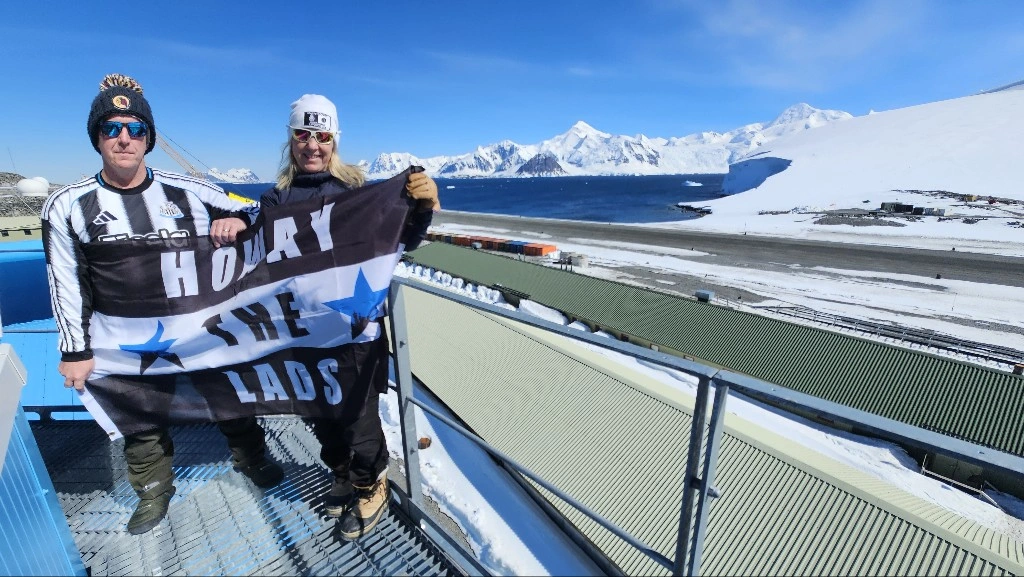
Christmas this year will be very different this year being down here at Rothera from my usual family Christmas back at home.
Depending on my shift pattern I might be working on Christmas Day. Responsibilities include flight following, and communicating to our field teams. On base they do push the boat out with a base Christmas dinner etc. At the same time the work has to continue as normal, especially if we have good weather to continue the research work we are here to do.
This year I plan to try and have a few video calls with the family on Christmas Day, when they are all together and hopefully one or two bottles of beer after our Christmas meal.
What does a typical day look like for you, from waking up to lights out?
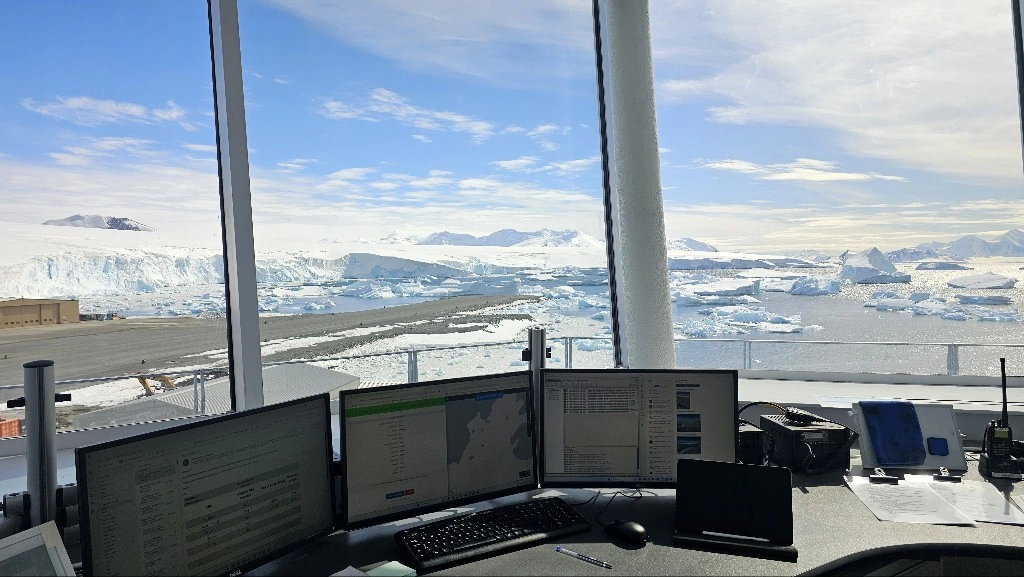
My work start times depend on what shift I am on in the rota pattern. A normal day would mean waking up and heading to our Communication Tower for 0620. I would then start checking all our communication systems to make sure they are all working. I will then communicate with one of our air unit hangar workers to do a safety check of the runway and the runway lights.
Part of the runway safety checks is to make sure we clear any wildlife off the runway. Penguins and seals like to come onto the runway to sleep. We also check for icebergs at either end of the runway so that they are not obstructing the safe arrival and departure of the aircraft. I will then radio a few of our field sites to get weather reports, so I can feed the information to our weather forecaster.
Penguins and seals like to come onto the runway to sleep. We also check for icebergs at either end of the runway so that they are not obstructing the safe arrival and departure of the aircraft.
We also attend a Met Brief which is conducted by a Met Office forecaster. They give the forecast for the places we are looking to fly to so that we can move people and equipment about at field sites to conduct research.
I will then return to the tower and get all the relevant paperwork ready. Duties include conducting flight following and weather reporting throughout the day, as well as doing communications for around the base and our boating operations. We do the flight following until the planes are back here at Rothera or at a field location for the evening. On an evening we also do radio schedules with our teams to make sure they are safe and well, and to pass on daily planning information.
After all the work is done, I then normally go for a beer and a game of pool. I like to socialise with others on the base, as well as having a walk around the local areas to see the wildlife or try and get a bit of snowboarding in before retiring to the accommodation building to get showered and ready for bed.
How do you stay safe in that environment?

The main thing down here to stay safe is to make sure you follow the guidelines that we have been taught. We must make sure we keep to the base procedures and policies.
The British Antarctic Survey provides you with all the clothing you need for working down here and the required training.
Around the base it’s very busy with various things going on as well as being an active airfield. This past few seasons the base has seen a lot of transformation so a lot of construction has been going on. Sometimes it’s also like working on a construction site.
Apart from the work-related environment you also have to protect yourself from the sun, as the UV is very strong down here. Every building on the base has sun protection dispensers so you can keep applying it to stop sunburn.
The weather is also very changeable. We could have blue skies and sunshine one day, and the next it could be blowing snow with 80 mph winds.
Another danger down here is one of the most beautiful aspects of Antarctica and that’s the wildlife. We always give them their space to stop disturbing them but we have a mixture of penguins, seals, birds and whales around our base. To see the humpback whales and orcas in the water is a beautiful thing but also could be deadly. Leopard seals have been known to attack people before so we have to give all wildlife respect, and keep our distance from them. At the end of the day we are here in their environment so we have to respect that.
Leopard seals have been known to attack people before so we have to give all wildlife respect, and keep our distance from them. At the end of the day we are here in their environment so we have to respect that.
How do you handle isolation and distance from home?
For me this has been one of the hardest parts of my time down here so far. My first time down here I was young and single in the Army. This time I have a wife and two boys and a dog back home who I miss a lot.
With modern technology now I’m able to video call them and use social media a lot to stay in touch but it doesn’t replace being back home with them.
Like myself many others are in the same boat down here. On base we have lots of activities scheduled throughout the week so there is plenty to keep your mind occupied.
Have you noticed your perspective on “normal life” changing while you’ve been away?
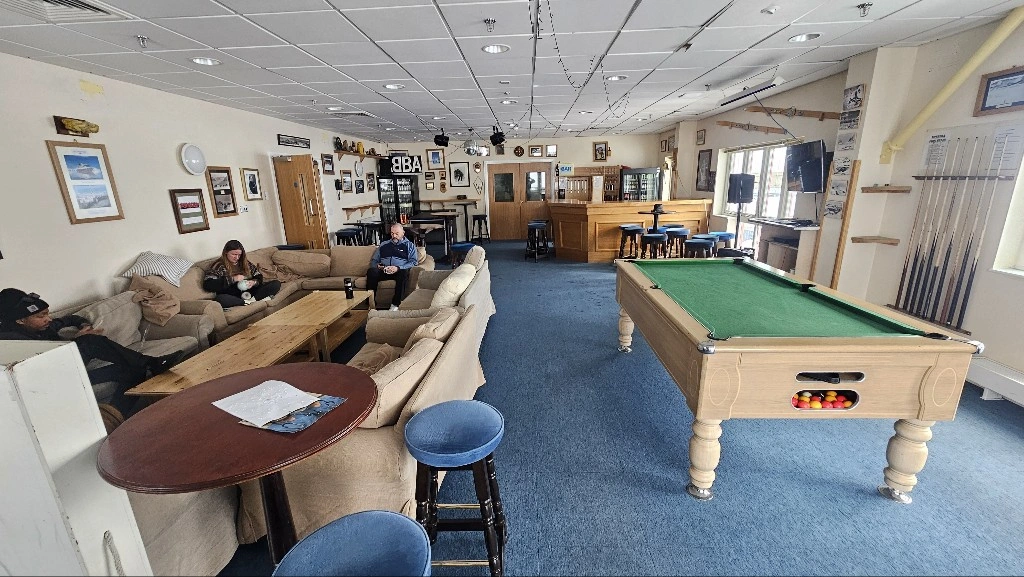
Very much so. Down here you don’t have your normal everyday go-to places you get back home like your Amazons or shops etc. You have to do with what’s provided on base or what you bring with you.
Because we are so isolated, on base we have to provide our own drinking water and water for washing clothes etc. The treatment plant we have on base does an amazing job, but it can get overloaded so you have to think about saving water when you can. So we use systems like ship showers. Get wet, stop the shower and get soaped up then turn it on to rinse off. We also use generators and solar power for our power supply. We have to be careful on what we use and how much of it to conserve energy.
How would you describe the Antarctic environment to someone who has only ever known British weather?
Remote, barren, very changeable, four seasons in one day.
Has being in Antarctica changed how you think about climate change and the future of the planet?
Has anything you’ve seen made it more personal?
Things have changed quite a bit. Just looking around the area of Rothera compared to what it was like 23 years ago when I was last here you can see big changes in the glaciers and surrounding areas. This year when I arrived, we had no sea ice surrounding the base at the beginning of the summer. Back in 2002 I arrived around the same time of the year and we still had about 40 miles of sea ice to the south and still frozen to the fjords to the north. They say things work in cycles but it does worry me how much things have changed over the 23 years between my visits.
A massive thanks to Mickey, for taking time out to pull back the covers on such an amazing story. I'd like wish him a very Merry Christmas and a happy New Year.