Fantastic British Farms and the Real Cost of Quality Food
A grounded look at Clarkson’s Farm, farming margins, and what a £58 turkey crown reveals about the real cost of quality food in Britain.

Why a £58 turkey crown tells a bigger stor
Welcome back to Field Notes for Modern Life. This week I bought the family Christmas turkey crown. It cost £58 from Cannon Hall Farm, near Barnsley in South Yorkshire. The meat there is exceptional, which is interesting, because the same weight at a City of London butchers would have set me back about £135. Yikes. That gap is not just “London being London”. It is a reminder that food prices are stories. They carry rent, labour, feed, fuel, refrigeration, welfare standards, paperwork, uncertainty, and a thousand small decisions that never make it onto the label.
I was thinking about all that as I walked out with a turkey crown in a bag, feeling quietly pleased with myself, like I’d outsmarted the system. Then the sensible voice arrived: you have not outsmarted anything. You have just got closer to the source.
And that is where Jeremy Clarkson comes in.
Like him or loathe him, Clarkson sparks conversation. He always has. But the surprise of Clarkson’s Farm is not that it is watchable. It’s that it has made millions of people look again at farming and hospitality, and actually stay with the subject long enough to learn something.
Prime Video has renewed the show for a fifth series, expected in 2026. Clarkson has also said the team intends to take a break after series 5, so a sixth series is not a given. The public mood right now is less “bring on series 6” and more “how long can they keep doing this without burning out”, which is a very farming question in itself.
The story behind the story
The smartest thing the show does is treat farming like real work done by real people, rather than scenery.
There’s no magic drone shot that makes the problems disappear. Weather ruins plans. Machinery breaks at the worst moment. Rules change. Timelines slip. You can do everything “right” and still end the year staring at numbers that make you wonder why you bothered.
The now-famous punchline from the first series was the profit: just £144. It’s funny until you pause long enough to realise what it’s actually saying. A year of risk, effort, early mornings, late nights, stress, and sunk costs, all for the sort of money you’d lose down the back of a sofa in a London flat-share.
That is the first lesson, disguised as entertainment, hard work does not automatically equal reward. Not in farming. Not in hospitality. Not in any business where the margins are thin and the variables are brutal.
Education, smuggled in as entertainment
There’s a line that does the rounds online, usually said with a grin: that Clarkson’s Farm has done more for public awareness of farming than Countryfile ever did. I’m not interested in pitting shows against each other, because they’re built for different purposes.
What interests me is why this one landed.
Why? Because it’s not a lecture. It’s narrative.
You learn because you care about the characters. You learn because you’ve laughed, then watched the laughter fade when the spreadsheet appears. You learn because you’ve seen the human cost of a bad decision, or a wet month, or a rule that sounds sensible in an office and feels ridiculous in a muddy gateway.
This is education by proximity. It puts the viewer in the passenger seat, not the classroom.
And it creates a strange outcome: people who would never normally read an article about agricultural policy suddenly have opinions about it.
Diversify or Drown: A Farmer's Conundrum
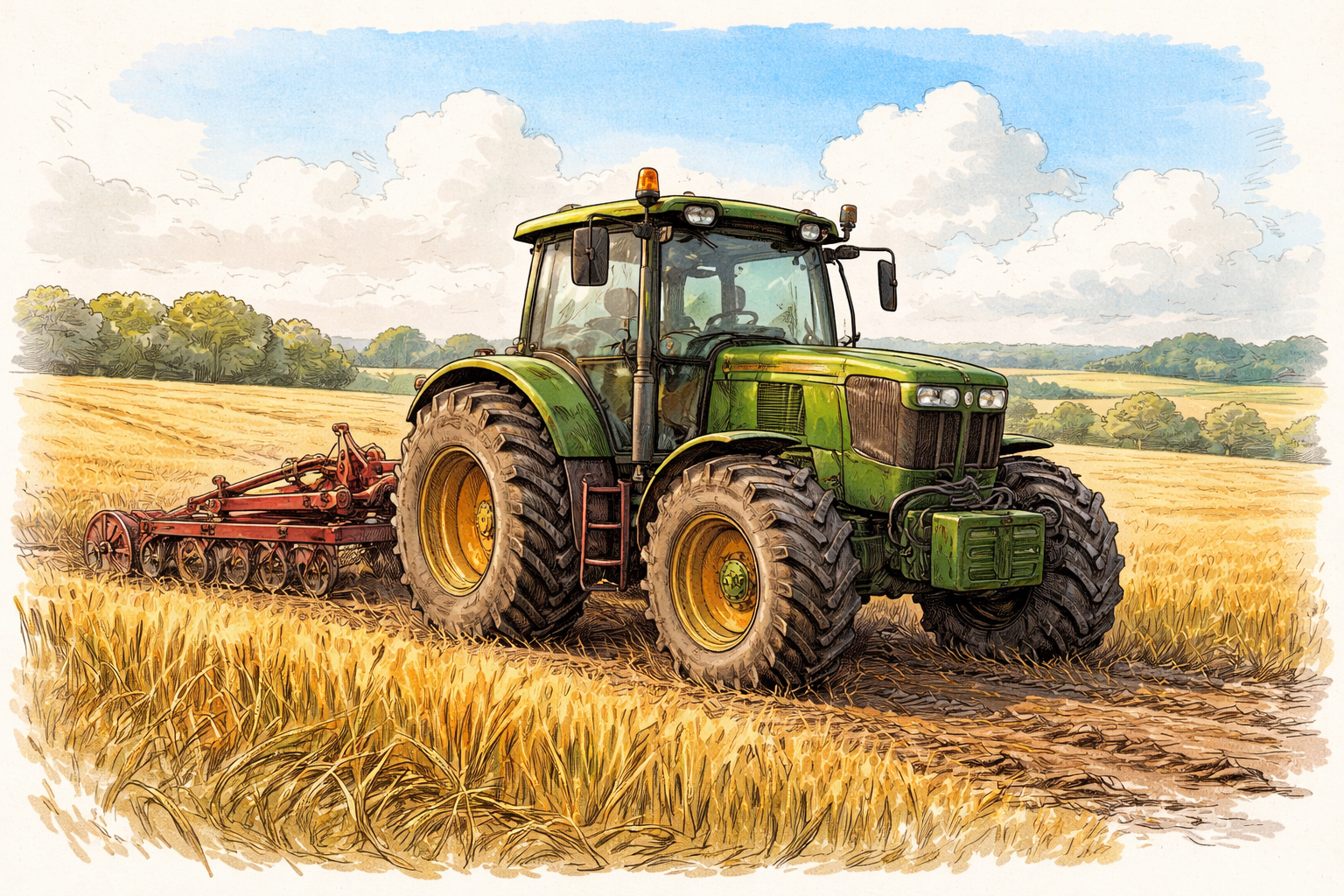
One of the clearest themes in the show is that modern farming is rarely just farming. Farmers are under pressure to diversify, not because it’s trendy, but because it can be the difference between survival and closing the gate for the last time.
That is why farm shops, cafés, glamping pods, butchery counters, ice cream barns, events, and “experiences” exist. They are not gimmicks. They are coping strategies.
Cannon Hall Farm is a good example of that wider reality. It’s not just fields and animals, it’s also a place people visit, eat, and shop. That blend of farming and hospitality is now normal, because it has to be.
Miscanthus and the net zero tangle
The show also touches something bigger than Clarkson, bigger than Diddly Squat, bigger than whether a farm shop can sell local sausages without causing a traffic jam.
Land use is changing, a change that affects us all.
Miscanthus is often described as a “bioenergy crop”, grown primarily for heat and electricity markets. It’s a perennial grass, and it’s part of a much wider debate about energy, carbon, and what we expect rural Britain to do for the rest of the country.
On paper green energy can look like a win. A hardy crop, useful for biomass, with research suggesting meaningful energy potential. But, innovation comes with trade-offs that need to be handled carefully, and communicated in plain English.
In reality, it can also feel like another example of pressure being shifted onto farmers. Grow this, not that. Change your rotation. Meet this standard. Fill in this form. Take on this risk.
If the price per tonne makes more sense than wheat, barley, or oilseed rape in a bad year, who can blame farmers for looking at alternatives? That’s not a moral failure. It’s a rational response.
The council is not a cartoon villain
Clarkson's Farm viewers may see West Oxfordshire District Council as “simply a menace”. I get the feeling behind that, because the show often frames the council as the stubborn antagonist.
But real life is usually messier than a plotline.
The council itself has pushed back on the idea that it exists solely to block the farm’s plans, pointing to multiple approvals and saying it does not want the farm shop to close. (West Oxfordshire District Council News)
Is this just TV drama or reality? Governance doesn't always make sense. Neighbours, highways, permissions, precedent, and a countryside that is a working landscape, a cherished place, and in the case of Diddly Squat Farm, a popular tourist attaction.
The deeper lesson here is not “councils are bad”. It’s that rural planning is now a frontline. Farming is not happening in isolation. It’s bumping into tourism, traffic, environment rules, housing pressure, and local politics.
That friction is part of the modern story of food.
Succession is the quiet crisis
The loud problems get airtime: weather, prices, machinery, the odd public bust-up.
The quiet problems are often worse.
Succession is one of them. The Irish Farmers Journal recently reported research suggesting 70% of farm families surveyed had no written, agreed succession plan. (farmersjournal.ie) That is not just paperwork. It’s identity, inheritance, fairness, retirement, and family dynamics, all tied to a single asset that is also a home and a way of life.
You can’t Netflix your way out of that.
But shows like Clarkson’s Farm can do something valuable. They can make people ask better questions. Not just “is it profitable?” but “what does it cost someone to keep going?” and “what happens when the people who know the land best are ready to step back?”
Why this matters when you’re buying a turkey crown
Back to the turkey crown.
When people say they don’t want cheap imports and they’re willing to pay for quality British or Irish produce, they’re often talking about taste. Sometimes they’re talking about welfare standards. Sometimes they’re talking about trust.
But there’s a bigger point hiding underneath. A lot of the cost of “cheap” food is simply paid somewhere else. Paid in soil, in carbon, in animal welfare, in wages, in the hollowing out of local supply chains.
And if you care about emissions, it’s hard to ignore that agriculture contributes to greenhouse gas emissions, and that the choices we make about what we produce, import, and subsidise have climate consequences. The tricky bit is that the solutions are rarely simple, and “green energy” debates can get contentious fast, especially when biomass, land use, and carbon accounting collide. (The Guardian)
So yes, buy the turkey crown. Enjoy it. Feed your people. That’s the point.
But maybe also notice what it represents. A web of labour and risk, and a sector that is being asked to feed us, employ us, entertain us, and decarbonise at the same time.
One question for you
If you watched Clarkson’s Farm and found yourself unexpectedly caring, what was it that got you?
The humour? The frustration? The weather? The sense that we’ve asked farmers to do the impossible while still expecting the supermarket shelf to look tidy and cheap?
Because that is the real power of education disguised as entertainment. It doesn’t just inform you. It changes what you notice when you’re standing at a counter, weighing up £58 versus £135, and deciding what kind of system you want to support.