Sheffield Wednesday Takeover: A Warning from History
Sheffield Wednesday’s takeover saga shows how not to run a club. Administration, points deductions, fan boycotts and what good ownership should look like.


You're everywhere and nowhere baby
I first came across Dejphon Chansiri in 2015, sat at my desk trying to turn a Master’s dissertation into something useful. I had been looking at the match day experience. From ticket pricing, merchandise, fan loyalty and how clubs balance the books without pricing people out. My work was shared with the club, indirectly, with the then Sheffield Wednesday chairman.
The feedback that came back via a former employee was blunt.
“None of this will land,” they said. “They aren’t his ideas.”
That line has been rattling around my head ever since. It feels like the most honest summary of the Chansiri era you could write.
Now, ten years on, Wednesday are one of the great warnings of English football. A historic club, sitting in administration, rooted to the bottom of the Championship on minus ten points and 27 points from safety, after a 12-point deduction for going into administration and a further six for repeated failures to pay what was owed.
The EFL has banned Chansiri from owning or directing an EFL club for three years. The language is polite. The reality is brutal.
This is not just a football story. It is a case study in how to ignore reality until it collapses on top of you.
A grand old club in a very modern mess
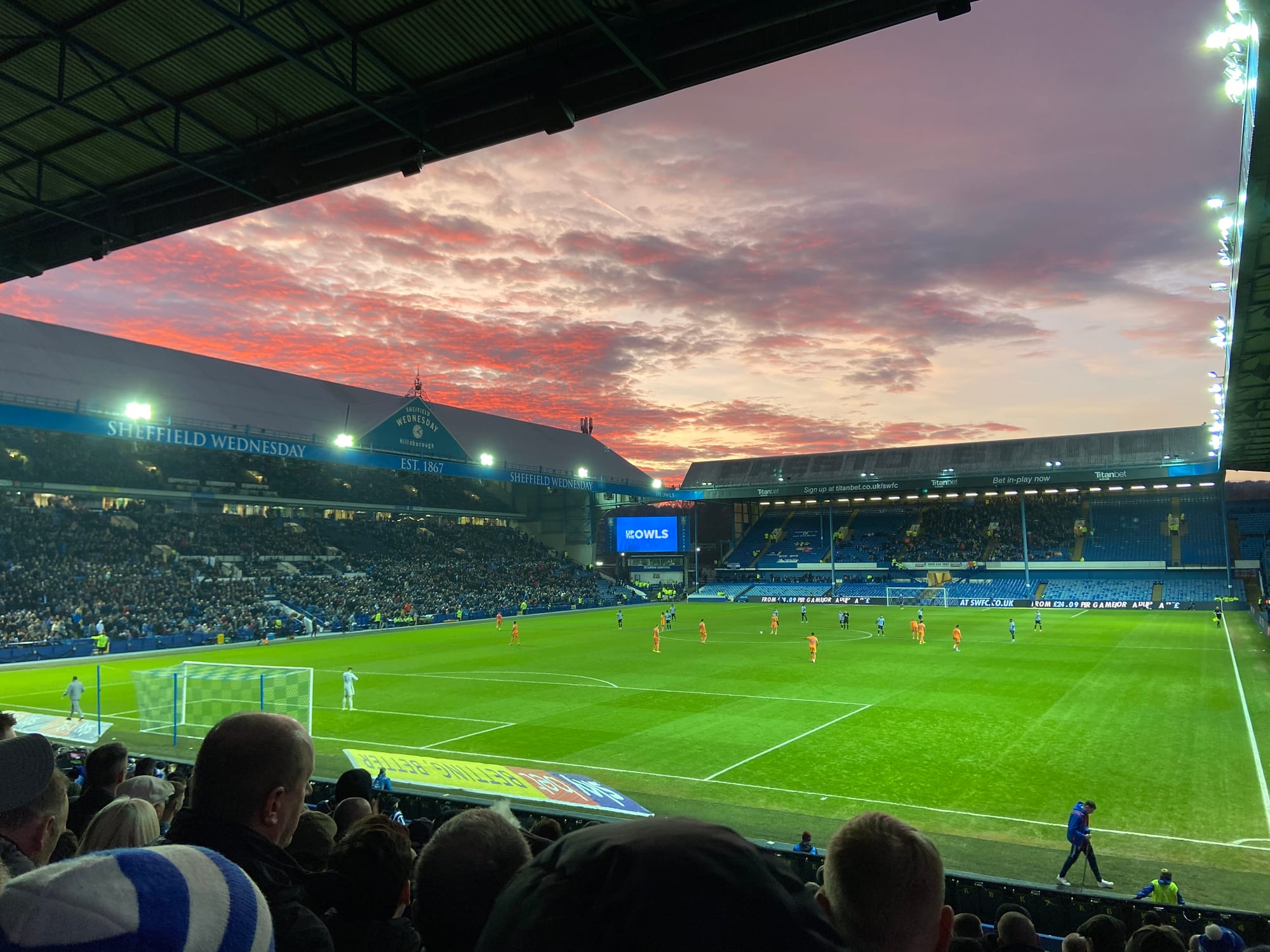
Sheffield Wednesday are one of the oldest professional clubs in the world. They have lifted league titles and cups, and for years Hillsborough was one of the great stages of English football. Wikipedia+1
The Premier League era has not been kind. Relegation from the top flight in 2000. Years bobbing between the Championship and the third tier. False dawns. Play-off heartbreak. That is football. It happens.
What is happening now is something different.
In October 2025 the club entered administration after a winding-up petition from HMRC. The automatic 12-point deduction left them bottom of the Championship. A second six-point penalty arrived in December for repeated failures to pay wages and other obligations. The table now reads like a death sentence: minus ten points, 27 from safety, with only one win all season.
This is not bad luck. It is leadership.
When you stop paying players and staff on time, you are not just short of cash. You are short of respect. You are telling everyone who works for the club that they sit somewhere below your ego on the list of priorities.
The EFL has finally responded with sanctions and a ban. It is late, but it is necessary.
Football club or financial asset?
Modern football is a business. We can be romantic about it, and we should be, but the numbers still have to add up. Wages, tax, stadium maintenance, catering, policing, travel, utilities. It is a complex operation.
Done well, ownership is stewardship. You take on a community institution, you try to leave it stronger.
Done badly, it looks like what we have just seen at Wednesday. Repeated late payments. Public rants. A transfer embargo for failing to meet obligations. An owner who once asked supporters to dig into their pockets to help pay a tax bill, while continuing to cling on to control. The Guardian+2Sky Sports+2
When it finally collapsed, it was the fans who had already clocked what was coming. They voted with their feet. Boycotts. Empty seats. A refusal to keep feeding a regime that treated them like a captive market instead of a community.
The administrators who followed did the obvious thing that somehow evaded the previous regime. They reduced ticket prices to something that reflects the reality of South Yorkshire wages rather than a fantasy of London SW3. The numbers are simple. Make it affordable, and people come back. Make the club feel like theirs again, and shirts start flying off the shelves.
The lesson is not complicated. If you treat a football club as nothing more than a financial asset, it will eventually behave like one. It will depreciate.
Hillsborough and the weight of history
Then there is the stadium.
Hillsborough is not just a neutral word on a fixture list. It carries the weight of the 1989 disaster.
The Leppings Lane end is still a live concern for many supporters and safety experts, with criticisms that it remains inadequate decades after the disaster. Sheffield Tribune+1 The North Stand dates from the early 1960s, part of the modernisation that helped bring the 1966 World Cup to Sheffield. The South Stand had its last major upgrade before Euro 96. The Kop belongs to a different era, and I remember that day in 1986, when Her Majesty the Queen opened the club's new covered terrace.
You can look at that and see a problem. Or you can see potential. Four visible layers of football history, waiting to be respected, renewed and made safe for the next generation.
The temptation, of course, is quick money. Name the stadium after a budget sports chain. Slap a logo on every surface. Sell the soul a square metre at a time.
Which brings us to the takeover talk.
Be careful what you wish for
Wednesday are on the block. The administrators say there are “four or five” viable bids in play. wednesdayites.com+1One name keeps cropping up: Mike Ashley, the former Newcastle United owner and founder of Sports Direct. Reports suggest a £20 million offer is on the table.
On paper, Ashley has what Wednesday need. He understands retail, he has experience running a club in a one-club city, and he can move quickly.
In reality, most Newcastle fans could not wait to see the back of him. Years of mid-table drift, sports-shop branding, and a sense that survival was enough. The club felt parked in a lay-by, waiting for someone more ambitious.
Do Wednesday really want Hillsborough turned into a giant advert for a discount brand while the team limps around League One?
The bigger question is this: do Wednesday want an owner who sees an opportunity to flip a distressed asset, or someone who is prepared to do the hard, boring work of rebuilding trust, structure and standards?
Because what comes next is not a quick fix.
The ripple effect: fans, workers, and the local economy
It is easy to talk about “the fans” as if they are just noise in the background. In reality, they are the product. The chants, the colours, the rituals on a Saturday afternoon.
They are also the people whose lives are quietly shaped by what goes on in the boardroom.
When an owner behaves recklessly, it is not just players who suffer. Club staff miss wages. Local suppliers go unpaid. Pubs lose trade when people stop going to games. The shirt printer, the pie manufacturer, the steward who tops up their income on match days, the taxi driver who does the Elland Road run and the Hillsborough run. They all feel it.
South Yorkshire is not a playground for billionaire egos. It is a region that has seen pits closed, steelworks restructured and promises broken. It deserves owners who understand that a football club is part of that story, not separate from it.
Mr Chansiri did not understand that. The next investor needs to.
What good ownership would look like
If I were back writing that Master’s dissertation today, I would be tempted to write it on Sheffield Wednesday alone. “How not to run a football club.”
The recommendations would be dull, which is exactly the point.
Pay people on time.
Tell the truth.
Publish a clear plan.
Price tickets sensibly.
Bring in people who know what they are doing and let them get on with it.
Recognise that the club existed long before you and will exist long after you.
For any new owner, the biggest asset at Sheffield Wednesday is not the land, not the brand, and not the league share. It is the fanbase. The away followings. The kids in blue and white shirts who have grown up with more disappointment than glory and keep turning up anyway.
Treat them with respect and they will do the rest. They will fill the Kop on wet Tuesday nights in League One. They will buy the shirts, sing the songs and drag the club back to life.
Treat them like an ATM and they will walk away again.
A final field note on Sheffield Wednesday
Wednesday’s predicament is not unique, and that is the most worrying part.
Across the leagues there are owners flirting with the same fate. Chasing promotion on borrowed money, betting the future of a club on one more roll of the dice, ignoring the people who keep warning that this is not sustainable.
Sheffield Wednesday should be a turning point, not a footnote. A reminder that history and tradition do not protect you from reckless leadership.
The fans have done their bit. They withdrew their consent. They forced change. Now the rest of football needs to pay attention.
Because if a club like Wednesday can be dragged to the brink like this, any club can. And if we are serious about football as something more than content for broadcasters, then who owns our clubs, and how they behave, has to matter far more than it currently does.
The days of Waddle, Hirst, Sheridan and Nilsson seem a long time ago. The future looks brighter, but a word for any new owner. A club is nothing without it fans.
UTO!